
When you decide to build a helix for your model railway, trial-and-error can get expensive fast. A helix uses repeated curved parts, a lot of track, support hardware, and a significant amount of layout space. Guessing at the grade or drawing parts by hand may work for a small mockup, but a full helix deserves a more organized design process.
The reason a helix is challenging is that it must satisfy several requirements at the same time. It needs to fit the room, match your track plan, climb at a workable grade, provide enough clearance, and remain strong and level through multiple turns. If any one of those conditions is ignored, the final structure may technically exist but not operate well.
A helix design tool helps you test options before committing to the build. It allows you to compare radius, rise, grade, turns, and footprint. That is especially useful when your layout room has limits. Sometimes a slightly larger radius improves operation. Sometimes the room cannot spare the extra diameter. Sometimes a small change in rise per turn makes the clearance safer but pushes the grade beyond what your trains can handle.
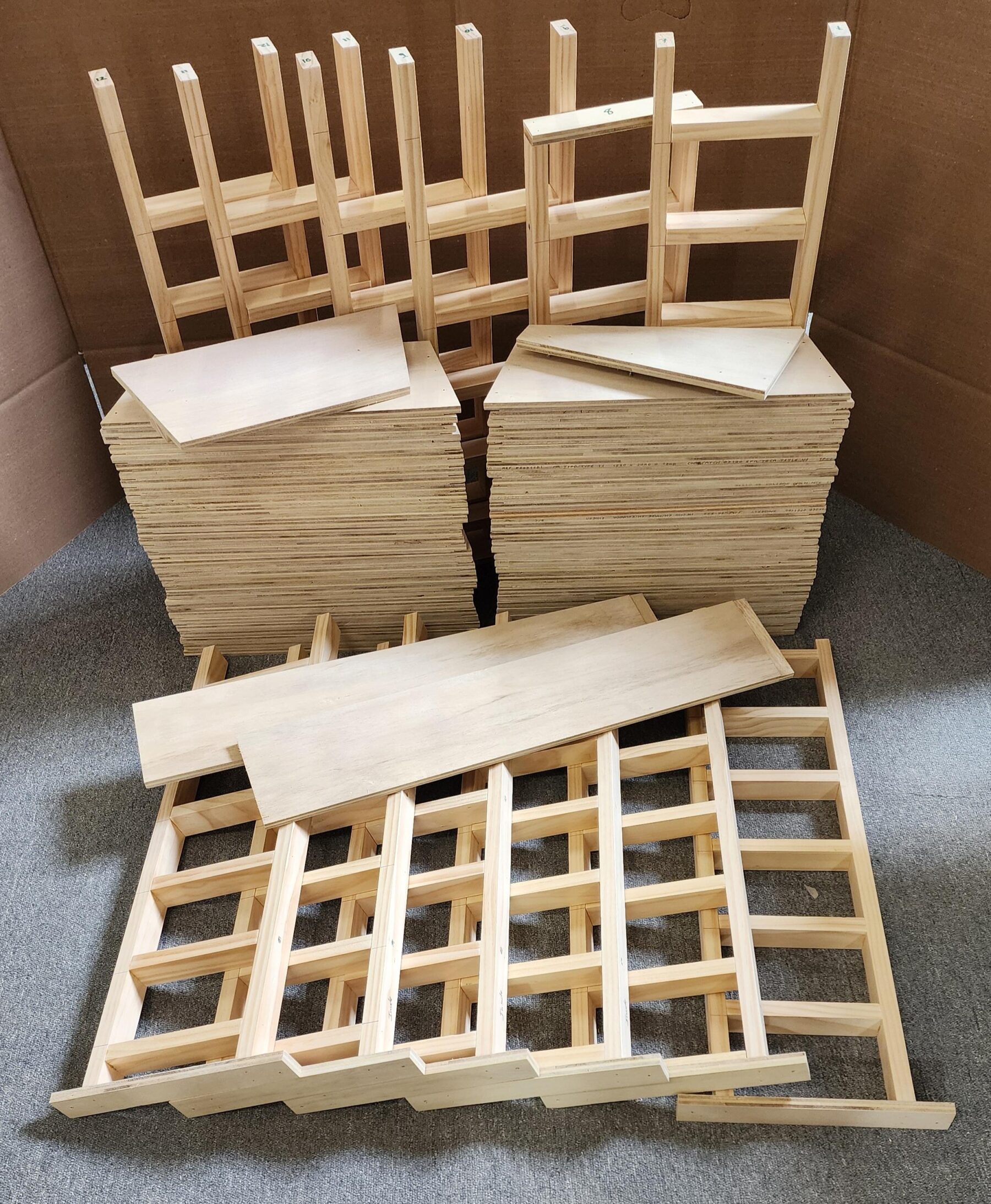
Basic helix calculators are helpful for early planning, but the next step is making the information buildable. A number on a screen does not cut the plywood. A good plan needs dimensions, a cut list, and assembly guidance.
The Helix Builder™ Digital Helix Design & Build Package was built around that problem. It combines a web-based helix design tool with PDF shop drawings and construction reference material so the modeler has a clearer path from planning to fabrication.
Where trial-and-error usually goes wrong
- The calculated radius does not include roadbed width or outside support space.
- The grade looks acceptable until the actual rise per turn is adjusted for clearance.
- The helix fits on paper but leaves no access for maintenance.
- Segment cuts vary enough to make alignment harder on upper levels.
- The entry and exit points do not land where the layout plan needs them.
A design tool does not replace careful building, but it reduces the number of unknowns. For the do-it-yourself model railroader, that can mean fewer recuts, fewer layout compromises, and a better chance that the helix becomes a reliable part of the railroad instead of a problem hidden in the corner.
If you are planning a helix and want a stronger starting point than guesswork, take a look at Helix Builder™. It is designed for model railroaders who want to plan, cut, and build with more confidence.
Benchwork Builder Pro, PDF Benchwork Plan Packages, Digital PDF Model Railroad Table Plan Packages, “PRO” Digital Benchwork Plan Packages, Model Railroad Benchwork Cut List & Plan Generator, Helix Builder, EZ-FOLD NTRAK Modules, EZ-FOLD Free-Mo Modules, and The Model Railroad Benchwork Store are Trademarks of The Model Railroad Benchwork Store/Model Railway Techniques.com and may not be reproduced, copied, or redistributed in any way without prior written consent by The Model Railroad Benchwork Store/Model Railway Techniques.com
Copyright 2026 The Model Railroad Benchwork Store/Model Railway Techniques.com All Rights Reserved
Last Updated on 4 months ago ago by James from Model Railway Techniques