
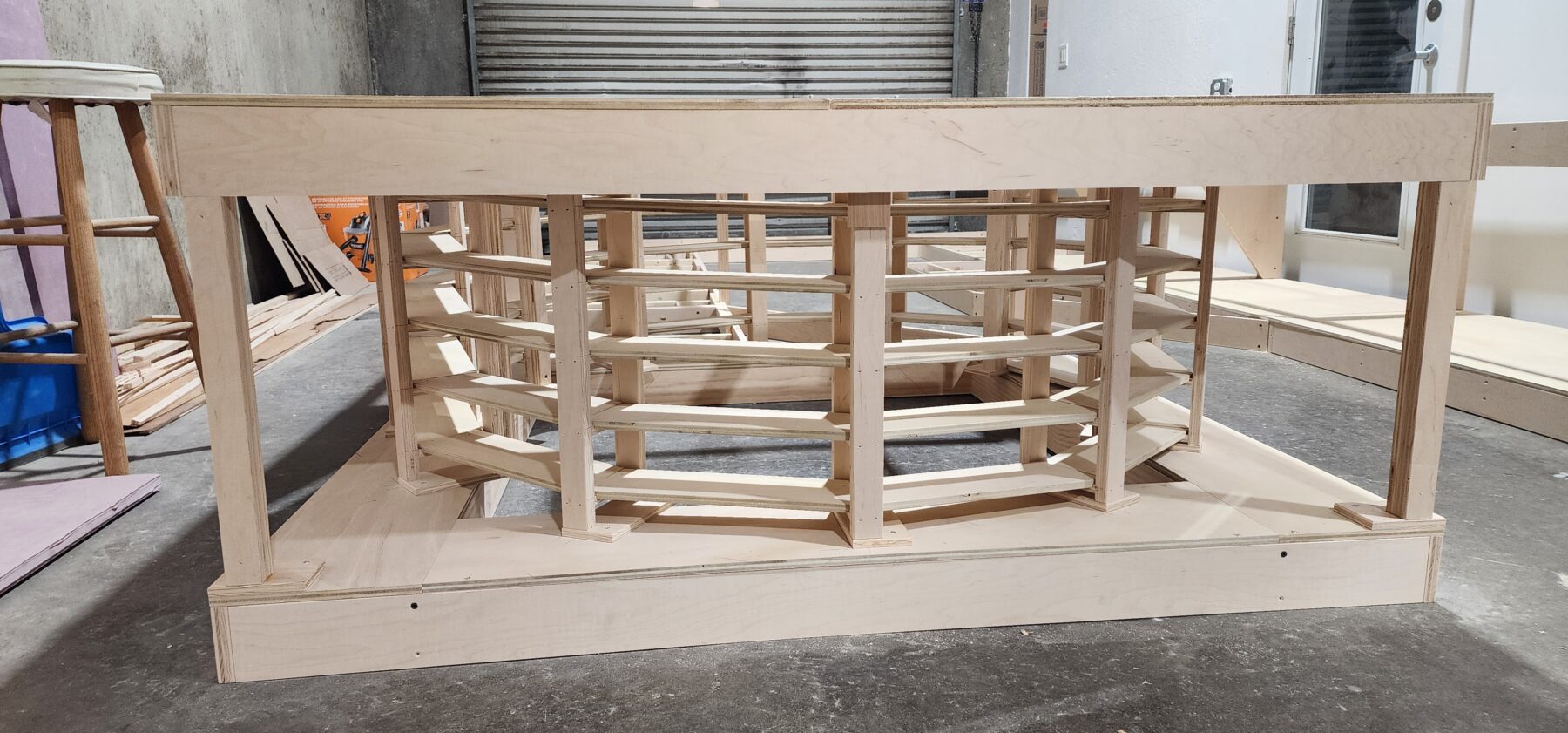
How to build a model railroad helix is one of the most common questions model railroaders ask when they start planning a multi-level layout. A helix looks simple at first glance: the train climbs in a circle, gains elevation, and reaches another deck. In practice, a successful helix depends on much more than drawing a circle on plywood. Radius, grade, rise per turn, clearance, roadbed width, entry points, and the number of turns all have to work together before you cut the first piece.
Why online helix calculators fall short
The biggest mistake is treating a helix as a weekend plywood project instead of a design problem. If the grade is too steep, trains struggle. If the clearance is too tight, taller rolling stock or double-stack cars may not pass. If the footprint is underestimated, the helix can take over the room before the main layout is even started. A few numbers on a calculator can help, but a buildable helix also needs a cut list, part dimensions, and assembly guidance.
A strong helix plan starts with five questions:
- What radius will your longest equipment handle comfortably?
- How much vertical rise do you need between levels?
- What grade can your locomotives actually pull?
- How much clearance do you need above rail height?
- How large will the outside footprint be after roadbed width and supports are included?
Those answers affect each other. A larger radius usually lowers the grade because the train travels farther per turn. More rise per turn improves clearance, but it also increases grade. More turns can reduce the strain, but they increase material, footprint, and track length. This is why many modelers redesign a helix several times before the final version is right.
Get a complete system for your model railroad helix
The Helix Builder™ Digital Helix Design & Build Package was created for this exact planning stage and beyond. Instead of stopping at grade math, it helps convert design inputs into build-ready information, including a browser-based design tool, cut list outputs, shop drawings, and assembly reference material. That combination matters because the math and the physical parts need to agree.
For a do-it-yourself builder, the practical goal is not just “Can I calculate a grade?” The real goal is, “Can I cut parts accurately enough to build a helix that fits my room and runs reliably?” A helix that is close but not square, close but not level, or close but not properly spaced can create years of operating frustration.
A better way to approach helix construction
Start with your available space and work backward. Decide the maximum footprint you can accept, then test radius and rise combinations. Check the grade before falling in love with the design. Verify clearance before assuming the next deck will fit. Then move from the calculator stage into the fabrication stage with a clear parts list and drawings.
Helix Builder™ from The Model Railroad Benchwork Store uses the exact same helix calculator, shop drawings, and parts fabrication process that we use for our helix kits, so you can be assured the design is well tested and proven.
If you are ready to plan a helix with less trial and error, review the Helix Builder™ package here. It is designed for model railroaders who want to build their own helix but would rather begin with organized dimensions, drawings, and a practical construction path.
Benchwork Builder Pro, PDF Benchwork Plan Packages, Digital PDF Model Railroad Table Plan Packages, “PRO” Digital Benchwork Plan Packages, Model Railroad Benchwork Cut List & Plan Generator, Helix Builder, EZ-FOLD NTRAK Modules, EZ-FOLD Free-Mo Modules, and The Model Railroad Benchwork Store are Trademarks of The Model Railroad Benchwork Store/Model Railway Techniques.com and may not be reproduced, copied, or redistributed in any way without prior written consent by The Model Railroad Benchwork Store/Model Railway Techniques.com
Copyright 2026 The Model Railroad Benchwork Store/Model Railway Techniques.com All Rights Reserved
Last Updated on 3 months ago ago by James from Model Railway Techniques