
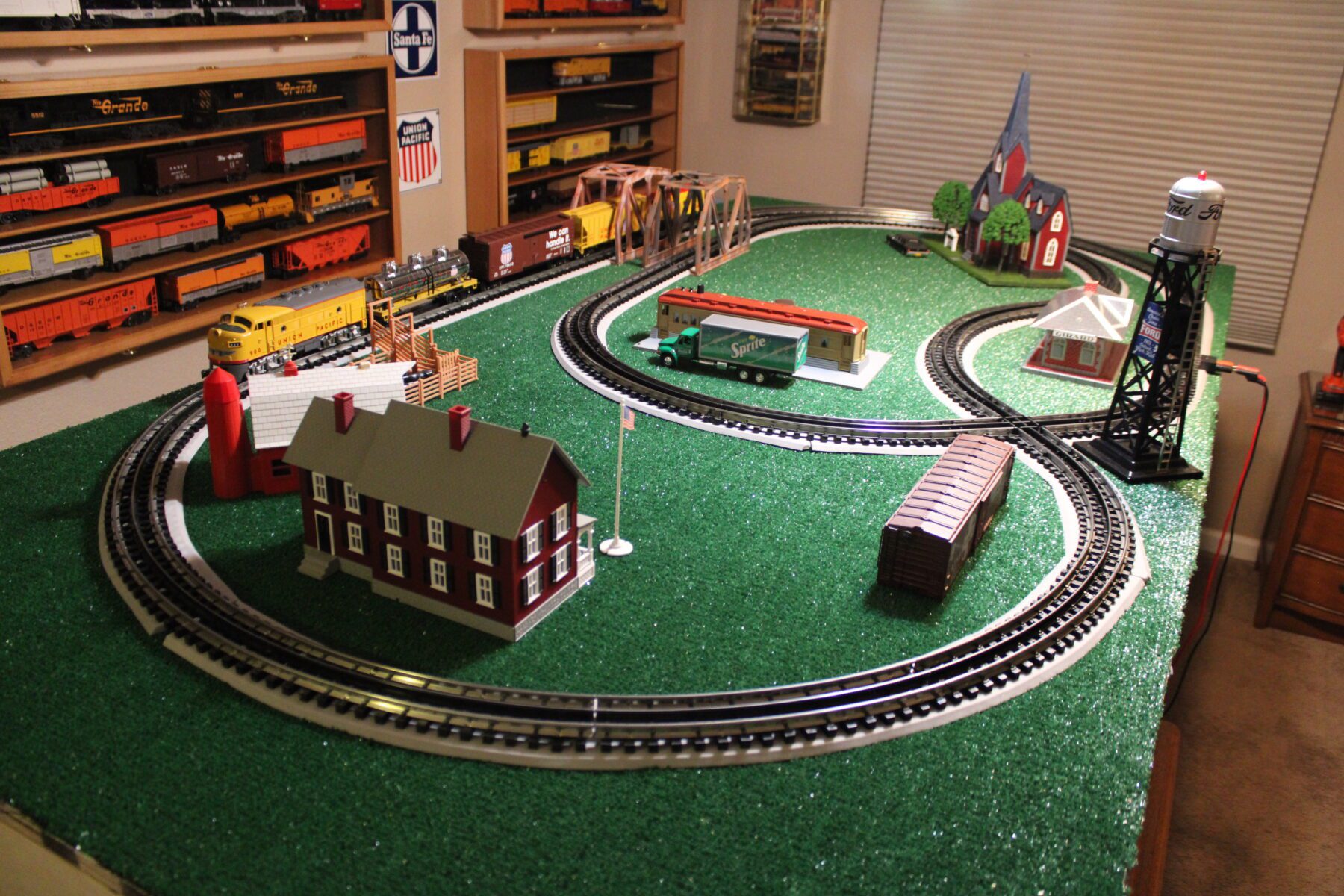
Building a permanent model railway baseboard should be one of the tasks you consider and complete first. Beginners are often eager to get trains running and, in their haste, often ignore this vital part of model railroading. But the baseboard stage determines how easy the rest of the layout building process will be. A little planning at the beginning can prevent uneven track, weak corners, poor access, and frustrating rebuilds later. A well designed and properly built foundation for your model railway will pay off in the future, ensuring you years of enjoyment.
The first decision is size. The baseboard must fit the room, but it also needs aisle space, reach distance, and access for wiring or scenery work. A baseboard that barely fits wall to wall may look good in a track plan, but it can become difficult to operate or maintain. Think about how far you can comfortably reach and where you will stand while working on the layout.
The second decision is height. Some modelers want a lower baseboard for children or seated work. Others prefer a higher baseboard for more realistic viewing. Height affects leg design, bracing, and how easily you can work underneath the railroad. Decide this early so the baseboard supports match the way you will actually use the layout.
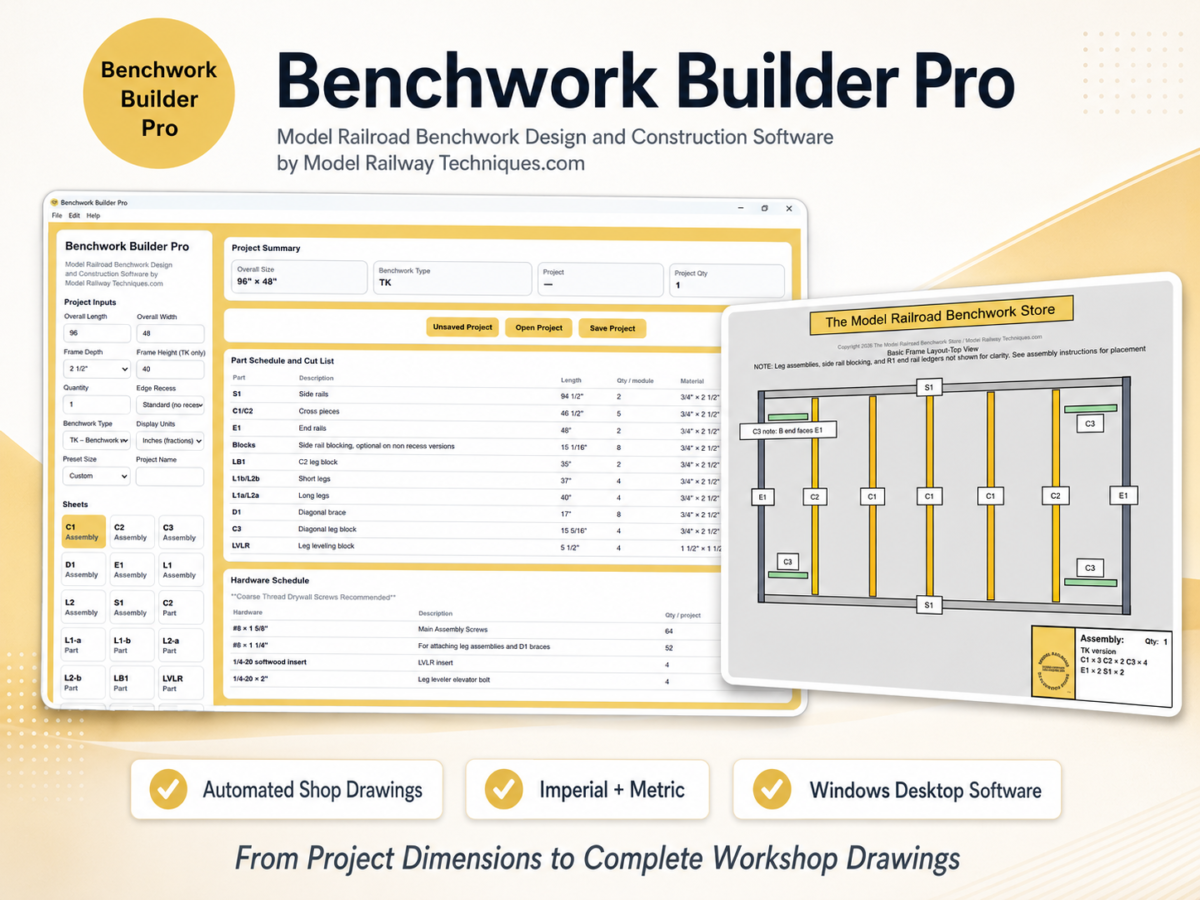
The third decision is how detailed your plan needs to be. A rough sketch may be enough for a temporary project, but a more serious layout benefits from drawings and a cut list. The Digital PDF Model Railroad Benchwork & Table Plan Packages give builders organized shop drawings, part information, and instructions so the project does not depend entirely on memory or guesswork, but rather a comprehensive method to achieve the end goal.
Beginner planning checklist
- Measure the room carefully.
- Allow for aisles and reach distance.
- Choose a comfortable layout height.
- Plan the frame before the tabletop.
- Check leg locations and bracing.
- Think about wiring access.
- Use drawings or a cut list when possible.
One of the biggest beginner mistakes is assuming their baseboard can be thrown together in a haphazard manner using cheap or secondhand materials. A well-designed model railway baseboard provides a strong structure, access system, and future expansion platform all at once. It supports the railroad physically and affects how the railroad is built, maintained, and operated. It often is an aesthetic portion of the room in which it is built and should be designed to be visually appealing.
Digital plans can help because they give you all the information required to build a quality baseboard right the first time. Instead of relying on information from different articles or styles, you can work from one coordinated package, making the whole process much more simplified and efficient. You can also print the pages, mark them up, and take them into the shop or lumber store.
For modelers who want to build their own baseboard but prefer a more organized plan and proven designs, the Digital PDF Model Railroad Benchwork & Table Plan Packages are worth reviewing before getting started.
Benchwork Builder Pro, PDF Benchwork Plan Packages, Digital PDF Model Railroad Table Plan Packages, “PRO” Digital Benchwork Plan Packages, Model Railroad Benchwork Cut List & Plan Generator, Helix Builder, EZ-FOLD NTRAK Modules, EZ-FOLD Free-Mo Modules, and The Model Railroad Benchwork Store are Trademarks of The Model Railroad Benchwork Store/Model Railway Techniques.com and may not be reproduced, copied, or redistributed in any way without prior written consent by The Model Railroad Benchwork Store/Model Railway Techniques.com
Copyright 2026 The Model Railroad Benchwork Store/Model Railway Techniques.com All Rights Reserved
Last Updated on 4 months ago ago by James from Model Railway Techniques